Access to safe, affordable housing is more than a social good — it is economic infrastructure. In Perth–Huron, where geography, local workforce realities, and rising housing pressures intersect, United Housing is demonstrating what is possible when rural community builders like United Way Perth-Huron take bold steps to build local economic resilience.
United Housing represents a regionwide, collaborative approach to addressing housing needs across the full spectrum, from market rate rentals that add to housing stock, to affordable units for low-income residents. The initiative is already reshaping the local housing landscape and laying the foundation for stronger, more inclusive economic development.
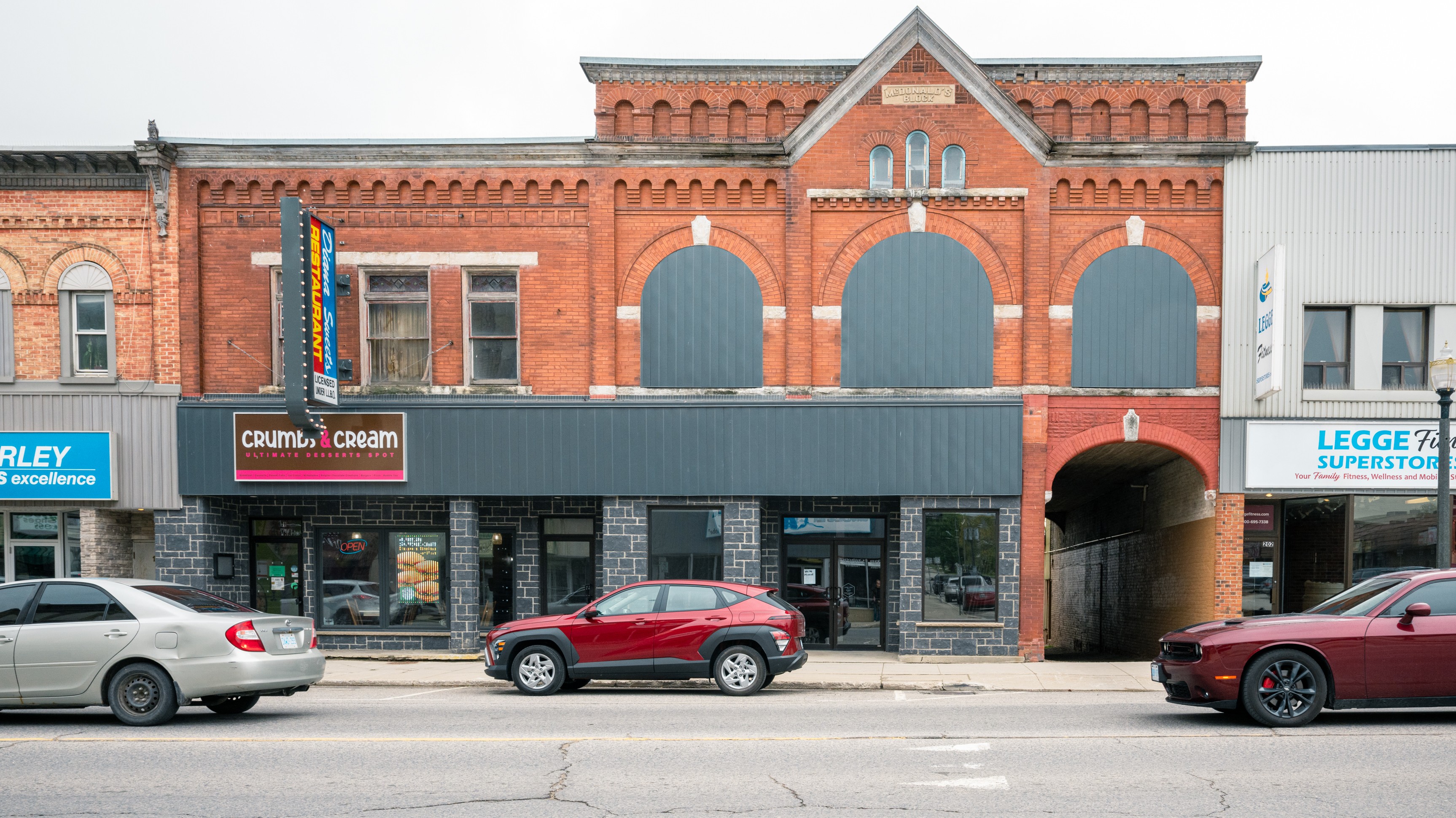
United Housing’s first project – the Music Hall Apartments – in Listowel, Ontario retrofitted an old music hall to create 10 units upstairs and one of the two commercial units on the main floor, which is now a community access centre.
Responding to a Growing Need
Nearly a decade ago, United Way Perth-Huron’s research team and local community committees began identifying troubling trends: housing availability and affordability challenges were increasingly affecting both residents and the regional workforce, particularly in healthcare. Recognizing this significant issue, United Way Perth-Huron launched a feasibility study, that ultimately led to the creation of United Housing.
United Housing was designed to serve a geographically large, rural region where access to housing affects everything from health to employment. As local employers increasingly reported difficulty recruiting workers due to a lack of available housing, including young doctors considering establishing themselves in the area, United Housing’s mission became even more urgent.
This housing model reflects the economic realities of the region: one-third of units are market rate, one-third are below market, and one-third are deeply affordable. This blend keeps projects financially viable while ensuring that residents are not siloed by socioeconomic status, thus enhancing quality of life as well as social and economic inclusion.
A Region Wide, Collaborative Strategy for Economic Development
United Housing treats housing and shelter as economic infrastructure, essential to workforce stability and regional prosperity. Affordable and available housing directly impacts employers’ ability to attract and retain employees; a concern echoed across Perth–Huron.
United Housing’s success is grounded in deep community collaboration. Each project is developed in partnership — with churches offering land, municipal partnerships providing support along with grants coming into the region.
Community Bonds: A New Funding Model for Rural Housing
A defining innovation has been United Housing’s use of community bonds to raise capital—a first for any United Way in Canada.
Developed in partnership with Tapestry Community Capital, these bonds allow residents to invest directly in local housing, much like a GIC, with returns of 2–3%. By blending “free” or low interest capital with conventional funding sources, the model helps make nonprofit housing financially viable in a rural context where construction costs and margins are often challenging.
Economic and Workforce Impacts
While early in its lifecycle, some of the initiative’s economic contributions are already emerging:
A Possible Model for Rural Canada
There are many models available to address housing availability and affordability in rural regions. United Housing is an example that can be replicated and is not only important because of the local impact it offers to the communities of Perth-Huron; it provides scalable housing models that work in rural settings. These models can be adapted to other rural environments that may face similar challenges.
Meanwhile, where urban regions demonstrate impact through large numbers, less densely populated rural areas work at scale: while individual projects may be small —10 units here, 20 units there — the cumulative impact across rural communities is significant and make a real difference to the local community even when numbers are smaller.
Lessons for Philanthropy, Policy, and Community Builders
From Perth–Huron’s experience, several key learnings emerge:
United Housing offers a compelling model of what rural communities can achieve when they approach housing as economic infrastructure. Perth–Huron’s story is one of persistence, creativity, and community spirit that centers solutions that strengthen entire communities.